
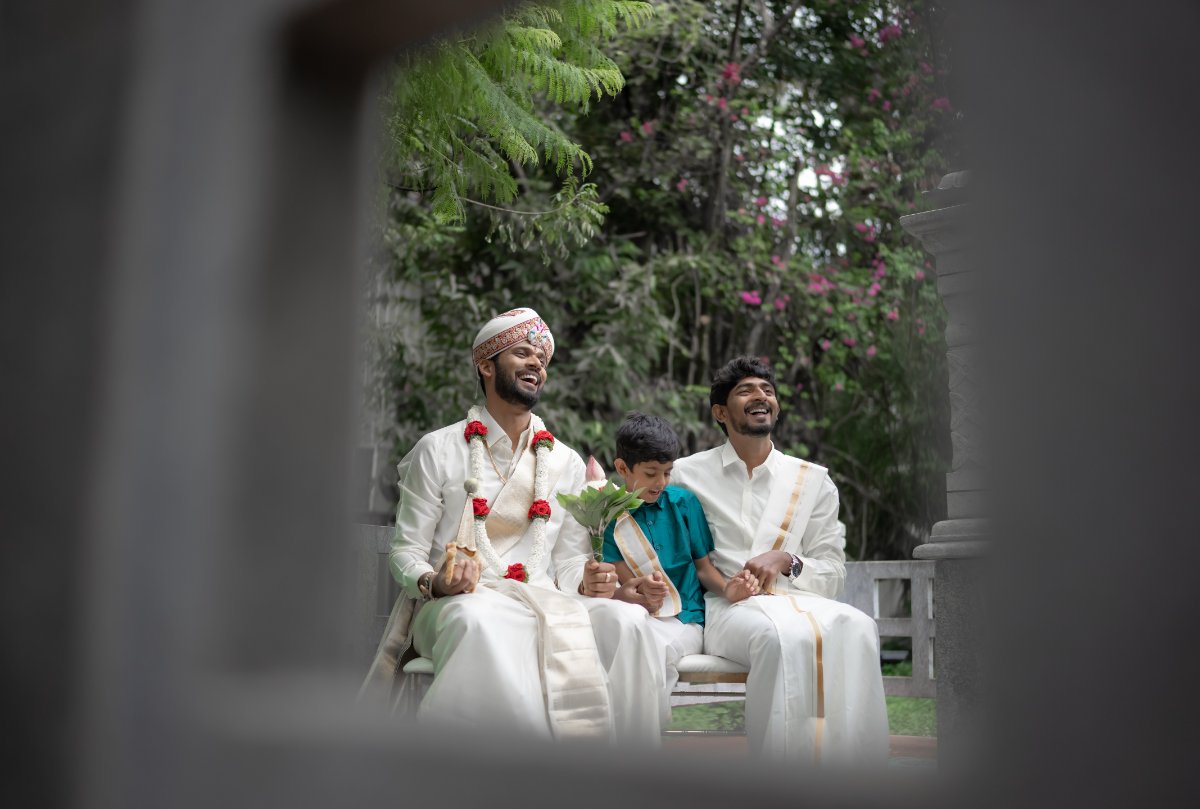
Kerala weddings are unlike any other wedding in India. The colour palette is cream and gold. The setting is often a backwater resort, a hill-station estate or a family home surrounded by coconut palms. The rituals are ancient, precise and spiritually intimate. The food is served on banana leaves on the floor.
Photographically, Kerala is the most naturally beautiful wedding backdrop in India. The challenge is understanding its traditions deeply enough to capture them with the respect and accuracy they deserve. This guide is for couples planning a Kerala wedding who want to understand what great photography of their traditions actually looks like.
The Kerala Wedding Aesthetic: Why It Photographs So Differently
Three elements define the visual identity of a Kerala wedding:
- The kasavu saree — cream/off-white Kerala handloom with a gold zari border. Against the lush green of coconut palms, monsoon-fed gardens and golden hour light, this creates a colour palette that no other Indian wedding tradition matches: cream, gold, green. No saturated reds or heavy embellishment to compete with.
- Natural decoration — banana stems, mango leaf torana (doorway garland), kolam at the entrance, jasmine, marigold and red hibiscus. The mandap is organic and seasonal, not synthetic or over-lit. Dramatically photographable in available light.
- The landscape — Kerala's backwaters, tea plantations, hill-station mists, cliff-facing beaches and forested Western Ghats create the most diverse set of natural backdrops of any Indian state.
Kerala Hindu Wedding Photography: Nair Traditions
Nair weddings are Kerala's most widespread Hindu tradition. The ceremony is typically short (2–4 hours), conducted by a priest in Sanskrit, and centres on the Pudamuri and Thalikettu.
Key rituals and their photographic moments
- Nishchayathartham (Engagement) — Held at the bride's home. The intimate scale means a single photographer can cover the entire event. The exchange of gifts and the first formal meeting of both families produces natural candid emotion.
- Kashi Yatra — Identical to the Tamil Brahmin tradition: the groom theatrically prepares to leave for Kashi, and the bride's father convinces him to marry. The performative comedy of this moment — and the family's delighted laughter — is the most spontaneous photography in the entire Kerala wedding sequence.
- Pudamuri — The groom ties a gold-bordered cloth around the bride. This is the defining Kerala ritual — understated, intimate and aesthetically clean. The close-up portrait of the groom's hands tying the cloth with the bride's face is a signature Kerala wedding photograph.
- Thalikettu — The tying of the thali (mangalsutra). In Nair tradition the thali is a gold leaf pendant tied with a specific knotting ceremony. The close-up at the exact moment of tying is the most important ritual photograph.
- Sadya — The post-ceremony feast. Guests sit on the floor in rows on banana leaf plates. An elevated position or drone shot from above reveals the communal geometry of the feast — one of the most uniquely Kerala photographs from any wedding.
Kerala Syrian Christian Wedding Photography
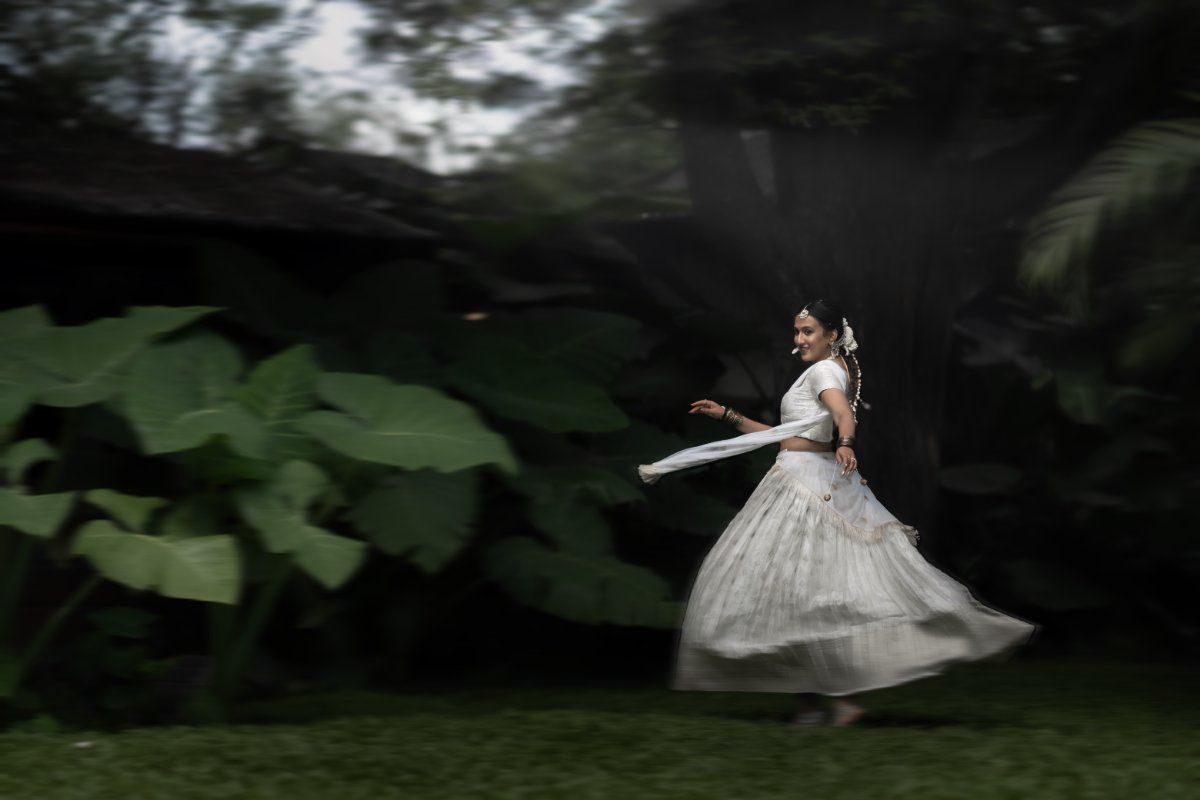
Kerala's Syrian Christian community (Marthoma, Orthodox, Catholic, CSI) combines the structured Western church ceremony with Indian silk aesthetics. This is the most photographically hybrid Indian wedding type.
Key moments to capture
- Church processional — The bride walking down the aisle in a Kerala silk sari (not a Western gown in most Syrian Christian weddings) with the natural light of a traditional stone church behind her. Frame in the church doorway from the altar side.
- Koonoose (Bent-neck prayer) — In Syrian Orthodox and Marthoma ceremonies, the priest places a cross on the couple's bent heads. The geometric composition — two bowed heads, a cross between them, a priest's hands above — is deeply symbolic and quietly beautiful.
- Tying of the cord — The groom's shawl is tied to the bride's sari in some traditions. A close-up portrait of the knot with both their faces in soft focus is a compelling symbolic frame.
- Church exterior — Many Syrian Christian churches in Kerala are ancient (some date to the 4th century). The stone exterior with the couple in Kerala silk against it produces a portrait you cannot get anywhere else in India.
- Bride preparation — Kerala Christian brides often wear a specific regional silk saree in cream with gold work rather than a white Western gown. The preparation sequence with the saree being draped and the jewellery placed is visually rich.
The Top Kerala Wedding Venues for Photography
Alleppey / Alappuzha (The Backwaters)
The definitive Kerala destination wedding location. Houseboat arrivals on the backwaters, sunset over the lagoon, and the Kerala coconut palm skyline produce photographs found nowhere else in the world. Best resort options for wedding photography: Marari Beach Resort, Punnamada Lake Resort, and private villa bookings on Vembanad Lake.
Drone opportunity: The backwater lagoons are among the best drone wedding photography locations in India — open water, low obstruction, and the aerial reveals the network of waterways in a way that is breathtaking. Permit achievement rate is high outside tourist season.
Munnar (Hill Stations)
Munnar's tea plantations at 1,600m altitude create misty morning light and an emerald backdrop that is visually opposite to the typical Indian wedding palette. Weddings here are intimate (most venues cap at 100 guests) and the photography is more editorial — lone couple in a landscape, fog rising from the valley, golden light on tea rows.
Best season for photography: October–February for clear skies. June–August for monsoon mist and dramatic rain sequences (popular for Reel shoots but logistically demanding).
Fort Kochi
Kochi's colonial-era Fort district has Dutch, Portuguese and British heritage architecture in a compact walking area. Chinese fishing nets at sunset, whitewashed churches, spice warehouses and the waterfront promenade create a distinctly layered backdrop. Works exceptionally well for couples who want a heritage-urban aesthetic rather than a natural landscape.
Varkala and Kovalam (Cliff-top Beaches)
Kerala's beaches are not the flat, wide-open type of Goa. Varkala's cliff-top ceremonies — mandap at the edge of a red laterite cliff overlooking the Arabian Sea — produce wedding photographs with natural drama. Sunset here turns the cliff face orange and the sea silver. Aerial shots from the cliff edge looking south along the coast are exceptional.
Thekkady / Wayanad (Forest Edge)
Forest-edge weddings for couples who want nature over grandeur. The jungle-border light, early morning mist, and spice plantation paths are a radically different Kerala experience. WildernessNest Wayanad, Spice Village Thekkady and The Windermere Estate Munnar are the leading photography-friendly options.
Technical Notes for Photographers Shooting in Kerala
Monsoon photography (June–September)
Kerala's monsoon season is one of the most dramatically beautiful times to shoot — but also the most logistically demanding. Heavy rain can start without warning. Every photographer shooting Kerala weddings during monsoon must carry:
- Rain covers for all camera bodies and lenses
- Waterproof bags for all equipment transit
- A weather backup plan — covered mandap alternative or indoor ceremony space
The upside: monsoon light is diffused and soft (perfect for portraiture), the landscape is at its most saturated green, and rain sequences for Reels are naturally achievable without a sprinkler rig.
Available light in Kerala homes
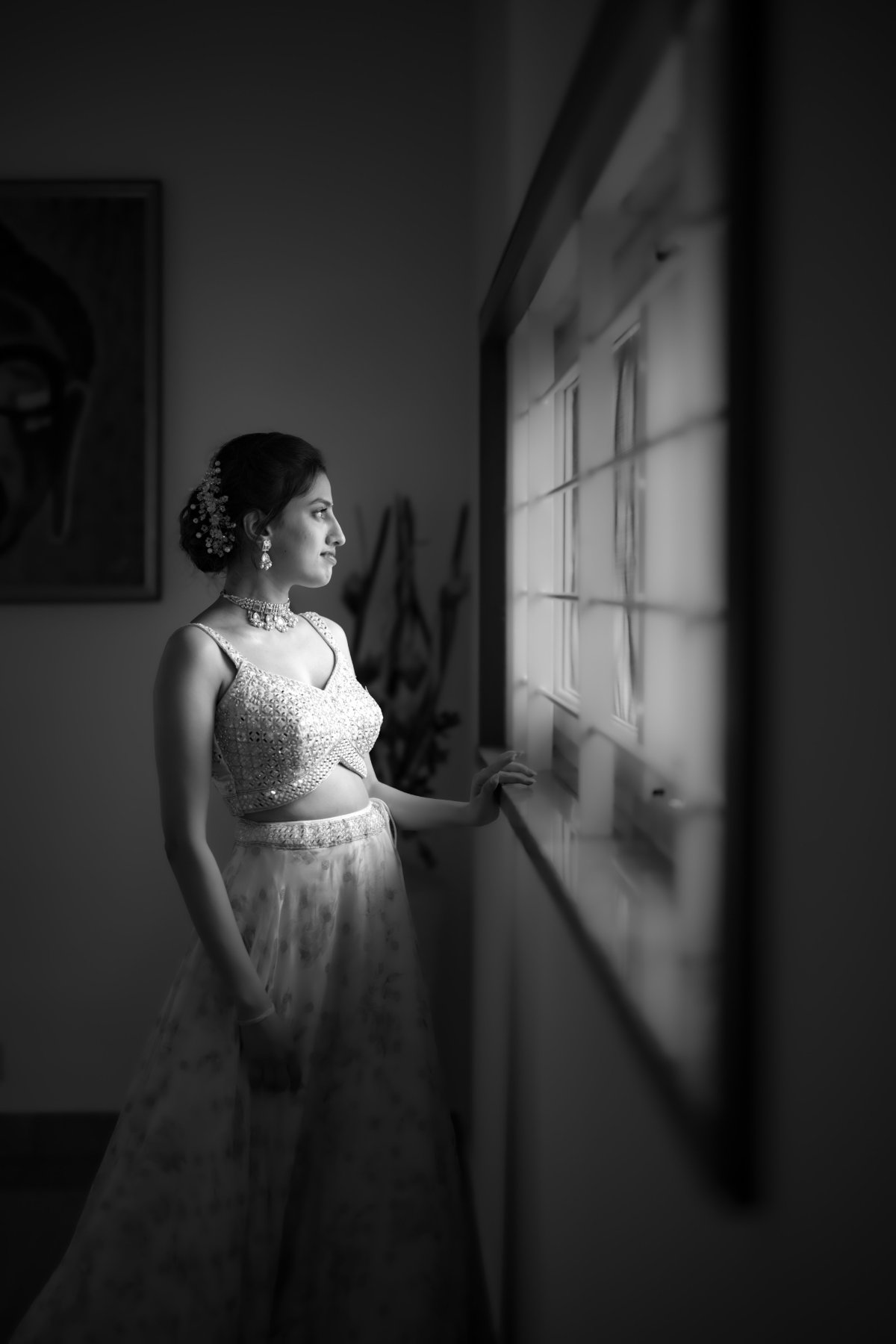
Many Kerala Hindu weddings are held at the family's ancestral home (tharavadu). These spaces are often dark, with natural light from doorways and courtyard openings mixed with warm incandescent interiors. This demands a photographer experienced with high-ISO available-light shooting — flash would destroy the atmosphere and is typically not appropriate in a ritual Hindu home setting.
WeddingClickz — Kerala Destination Wedding Coverage
We cover weddings across Alleppey, Kumarakom, Munnar, Kochi, Varkala and Thekkady. Our Kerala packages include full travel management, DGCA drone co-ordination for backwater venues, and a cinematic highlight film.
Plan Your Kerala WeddingPrefer a form? Send us your details → — reply within 24 hours.
Questions to Ask a Kerala Wedding Photographer
- "Have you photographed a wedding in [Nair / Syrian Christian / Namboothiri / Mappila] tradition specifically?"
- "Can I see full galleries from at least one Kerala wedding similar to mine?"
- "How do you handle available-light photography inside a traditional tharavadu home?"
- "Do you have experience with backwater resort weddings and houseboat arrival shots?"
- "Who handles DGCA drone permissions for our Alleppey/Kumarakom venue?"
- "What is your monsoon backup plan?"
What is the best time of year for a Kerala wedding and photography?
October to February for dry season clarity, outdoor ceremonies and reliable drone weather. November and December offer the best of all worlds — post-monsoon lush green landscape, clear skies, and pleasant 25–28°C temperatures. June–August (monsoon) creates dramatic, moody photography but requires robust contingency planning.
What are the best venues for a destination wedding in Kerala?
Alleppey backwater resorts (houseboat arrivals, lagoon sunsets, drone aerial of waterways), Kumarakom Lake Resort (private lake frontage, serene), Munnar hill estate properties (tea plantation mist, golden morning light), Fort Kochi heritage properties (colonial architecture, Chinese fishing nets), and Varkala cliff-top venues (Arabian Sea aerial backdrop).
What makes Kerala wedding photography different from other Indian weddings?
The kasavu cream-and-gold palette, natural venue decoration (banana stems, mango leaves, jasmine), the landscape (backwaters, hill stations, beaches), and the intimacy of the ceremony. Kerala weddings are quieter and more spiritually meditative than North Indian weddings — the photography reflects this: less performance, more documentation, more emphasis on environment and faces over décor spectacle.
Does WeddingClickz photograph Kerala destination weddings?
Yes — we have documented weddings in Alleppey, Kumarakom, Munnar, Thekkady, Fort Kochi, Trivandrum and Varkala. Kerala is one of our most-booked destination states. Our Bangalore base makes logistics straightforward: a 3-hour flight or overnight drive from most Kerala wedding venues.