
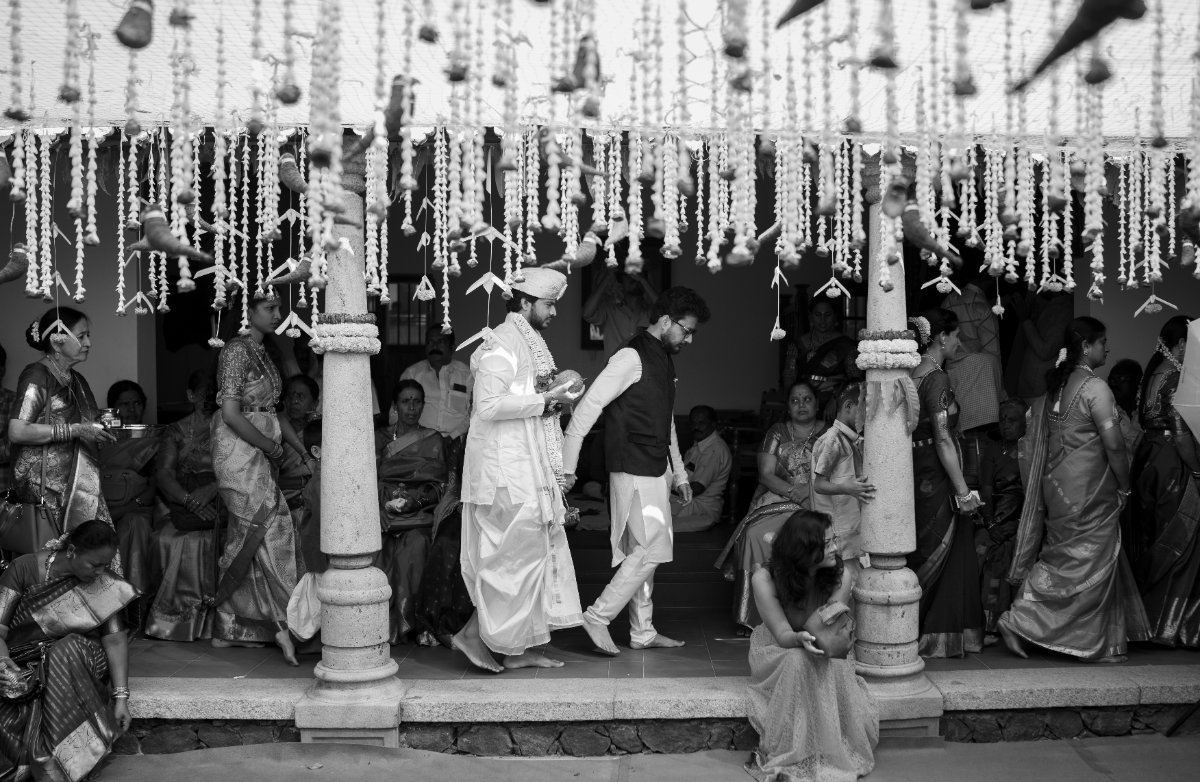
South Indian weddings are among the most photographically rich and ritually complex ceremonies in the world. The challenge – and the opportunity – is that no two South Indian communities celebrate exactly the same way. A Tamil Brahmin Iyer wedding is structurally different from a Nadar Christian wedding, a Telugu Kapu wedding or a Nair wedding in Kerala.
This guide breaks down the key traditions, the must-capture frames in each, and what to look for when hiring a photographer who actually understands what they're documenting.
What Makes South Indian Wedding Photography Unique
Three things distinguish South Indian wedding photography from North Indian wedding photography:
- Daytime ceremonies – Most South Indian weddings happen in the morning, between 6am and 12pm, during the auspicious muhurtham window. This means photographers face harsh midday light rather than the forgiving golden hour of North Indian evening ceremonies.
- Temple and marriage hall venues – As opposed to outdoor lawns or 5-star ballrooms, most South Indian weddings happen in temple halls or community kalyana mandapams with mixed daylight-and-artificial lighting. This is technically demanding to photograph well.
- Ritual density – A 4-hour Tamil Brahmin ceremony has more individual ritual moments (each with a distinct visual expression) than a 2-day North Indian wedding. Missing any of them is unacceptable.
Tamil Brahmin Wedding Photography
Tamil Brahmin (Iyer and Iyengar) weddings are highly ritual-dense and aesthetically distinctive — gold Kanjivaram silk, banana leaves, flower garlands, the kolam (rangoli) at the entrance, and ceremonies conducted in Sanskrit with Vedic chanting.
Key rituals to photograph
- Kashi Yatra – The groom theatrically announces he is leaving for Kashi (Varanasi) to become a monk; the bride's father convinces him to marry instead. This is the most visually playful sequence of the entire wedding and produces the best candid reactions from guests.
- Oonjal (Swing ceremony) – The bride and groom sit on a decorated wooden swing while female relatives sing folk songs and feed them milk and banana. Aesthetically one of the most beautiful frames in Indian wedding photography: the swing, the silk, the flowers, the faces.
- Muhurtham / Thali tying – The most sacred moment: the groom ties the mangalsutra (thali) around the bride's neck. The photographer must be in position before the exact muhurtham minute.
- Talambralu – The couple pours rice and flower petals over each other's heads. Pure joy — always produces genuine laughter and spontaneous emotion.
- Saptapadi – Seven steps around the sacred fire, each with a vow. Each step is a portrait opportunity.
Telugu Wedding Photography
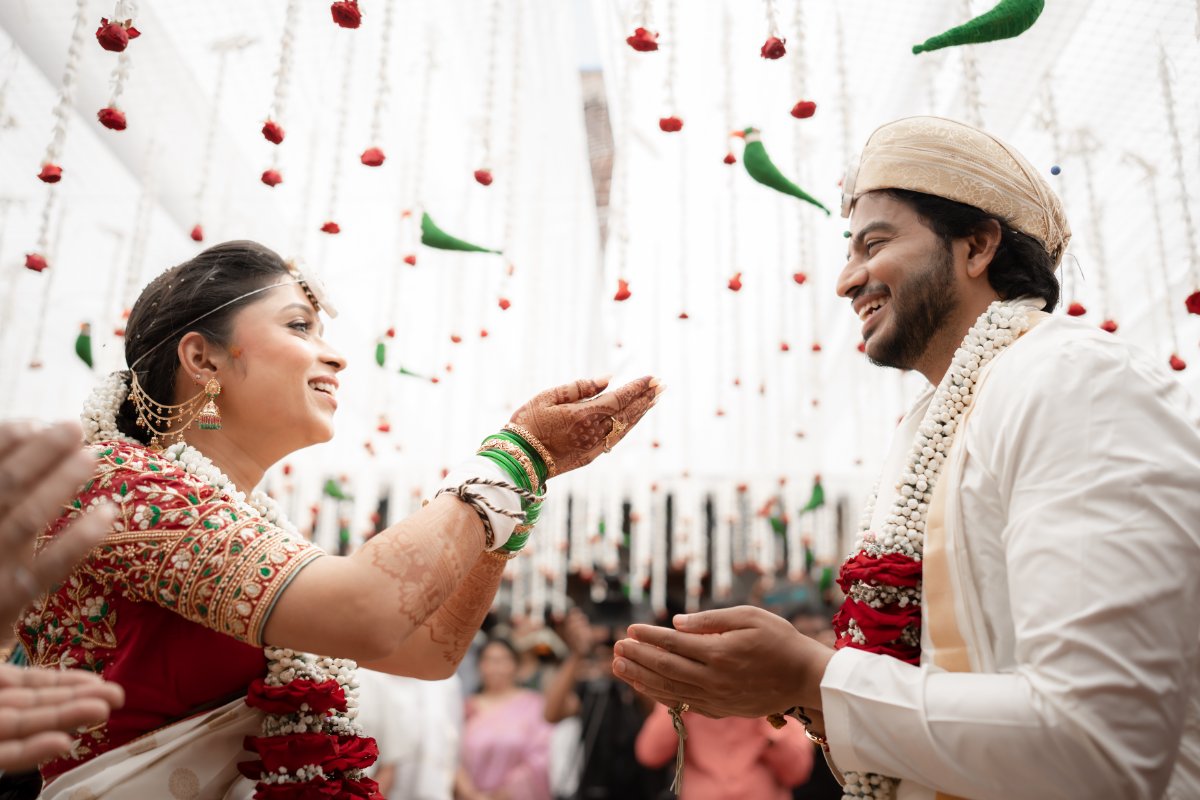
Telugu weddings (Brahmin, Kamma, Reddy, Kapu, Naidu communities) are known for their visual extravagance — the bride's jewellery, the scale of the flower decorations, and the elaborate welcome rituals for the groom's party.
Key rituals to photograph
- Jeelakarra Bellam – Cumin and jaggery are placed on the couple's joined hands while a silk cloth is held between them. The exact moment the cloth drops and they see each other is one of the most photographed instants in Telugu weddings.
- Mangalasnanam – The ritual oil bath the day before, a visually rich sequence
- Kanyadanam – The father gives his daughter's hand to the groom, a deeply emotional portrait moment for parents
- Arundhati Nakshatra viewing – The couple observes the Arundhati star together; intimate and quiet
- Saptapadi – The seven steps, usually completed quickly; pre-positioning is critical
Kannada Wedding Photography
Kannada weddings vary significantly between Brahmin (Smartha, Madhva, Iyengar), Lingayat and Vokkaliga communities. Bangalore-based Kannada weddings are often held in large air-conditioned kalyana mandapams with professional lighting rigs — easier technically but still ritual-demanding.
Key rituals to photograph
- Nischitartha – The engagement ceremony, often held in a decorated home; smaller and more intimate to photograph
- Dhare Ereyuvudu – The bride's father pours water over the couple's joined hands in a symbolic giving. Always a strong emotional portrait of the father.
- Mangalya Dharane – Thali tying; same precision requirements as the Tamil muhurtham
- Saptapadi and Laja Homa – Seven steps and fire ritual; the laja (puffed rice) thrown into the fire creates a visually striking frame
- Akshata – Guests shower blessed rice on the couple. High-speed burst photography captures the rice mid-air over the couple.
Kerala (Malayali) Wedding Photography
Kerala Hindu weddings (Nair, Namboothiri, Ezhava communities) are among the most minimalist and aesthetically serene of all South Indian traditions. The colour palette — cream and gold Kerala kasavu, white flowers, banana and mango leaf decorations — creates a naturally beautiful photography environment.
Key rituals to photograph
- Pudamuri – The groom ties a gold-bordered cloth around the bride. Understated but visually elegant.
- Thalikettu – Thali tying in the Kerala style; usually done under a nettipattam (golden headpiece) that frames both faces beautifully
- Ashtamangalya Prasnam – A detailed astrology consultation sequence; quieter and more meditative to photograph
- The sadya setting – The post-wedding feast on banana leaves is a documentary photography feast. Overhead drone or elevated angle captures the rows of guests eating on the floor.
For a dedicated deep-dive on Kerala weddings, see our complete Kerala wedding photography guide.
South Indian Christian Wedding Photography
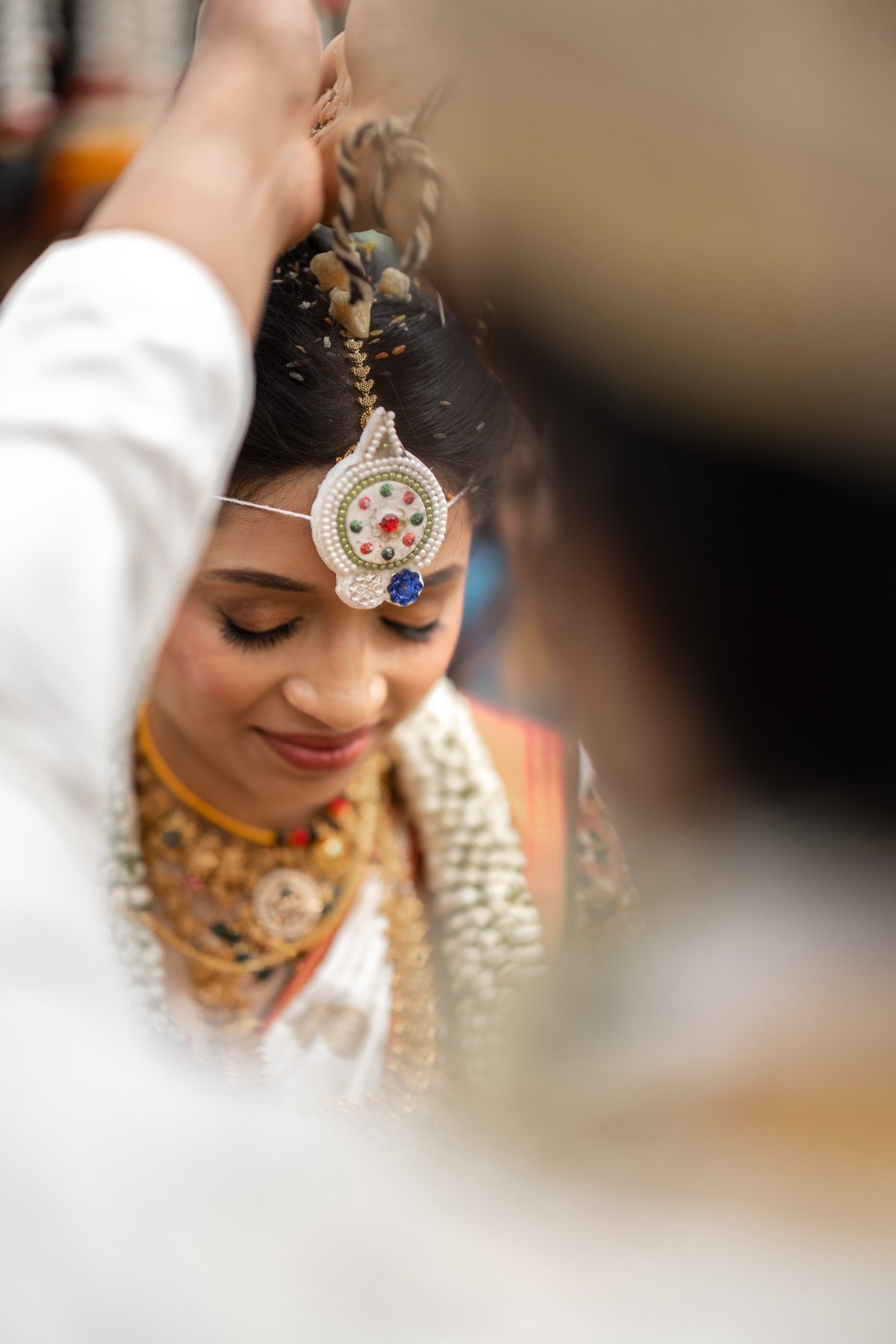
South Indian Christian weddings (Syrian Christian, CSI, Catholic communities in Kerala, Tamil Nadu and Goa) combine Western church ceremony structure with distinctly Indian aesthetics — silk sarees instead of white gowns, flower garlands instead of bouquets, and family customs that vary by denomination.
- Church ceremony – The structured Western church format gives photographers clear key moments: the processional, vows, ring exchange, first kiss, and exit. Use of flash must comply with church rules — always confirm in advance.
- Syrian Christian traditions – Marthoma and Orthodox ceremonies include the koonoose (bent-neck prayer) and the ritual of tying the bride's sari to the groom's shawl — visually unique moments.
Technical Challenges in South Indian Wedding Photography
Morning light and harsh midday sun
The muhurtham window often falls between 7am and 11am. At 9–11am in Bangalore, Chennai or Hyderabad, outdoor light is already intense and directional. Your photographer needs to flag or diffuse supplemental lighting and know how to expose for the couple's faces in backlit or side-lit temple environments without destroying the ambient mood.
Mixed colour temperatures
Traditional marriage halls mix yellow sodium-vapour or warm LED panel lighting with daylight coming from high windows. This creates a mixed colour temperature that looks terrible on automatic white balance. Look for photographers whose galleries show consistent colour rendering across ritual sequences — this is a skill differentiator.
Temple restrictions
Many temples and agraharam venues restrict flash photography during rituals. Ensure your photographer is experienced with high-ISO available-light shooting on full-frame cameras. Ask to see indoor temple shots in their portfolio specifically.
WeddingClickz: 11+ Years of South Indian Wedding Expertise
We have documented 800+ South Indian weddings across Tamil, Telugu, Kannada and Malayali traditions. Our team knows every ritual by name and is in position before it begins — not running to catch up.
Book a ConsultationPrefer a form? Send us your details → — reply within 24 hours.
What to Ask a Photographer Before Hiring for a South Indian Wedding
- "Can I see a full gallery from a wedding in my specific community?"
- "Do you know the sequence of rituals for [Tamil Brahmin / Telugu / Kannada / Nair] weddings?"
- "How do you handle muhurtham timing — do you have a shot list that day?"
- "How many photographers will be covering inside the mandap versus the guest area?"
- "Will you use flash inside the temple/kalyana mandapam?"
- "Can I see indoor, available-light shots from your previous weddings?"
What makes South Indian wedding photography different from North Indian?
South Indian ceremonies are typically daytime, shorter, more ritually concentrated, and held in temples or marriage halls rather than outdoor gardens. The photography demands ritual knowledge, ability to handle harsh midday light, and sensitivity to the spiritual nature of the ceremony. Flash is often restricted; high-ISO available-light photography is essential.
Which South Indian wedding rituals must never be missed?
The thali/mangalsutra tying (any community), the kanyadanam (father giving away the daughter), and the community-specific centrepiece ritual (Kashi Yatra + Oonjal for Tamil, Jeelakarra Bellam for Telugu, Dhare Ereyuvudu for Kannada, Pudamuri for Nair). These are the frames every parent will check first in the delivered gallery.
How long does a South Indian wedding photography package cover?
A complete package covers 2 days minimum: the pre-wedding events (Mehendi, Seemantham or Pellikuthuru) on day one and the main wedding ceremony plus reception on day two. Total active shooting time is typically 12–18 hours across both days.
Are WeddingClickz photographers experienced with South Indian weddings?
Yes — WeddingClickz is headquartered in Bangalore and has documented 800+ South Indian weddings across Tamil Brahmin, Telugu, Kannada, Nair, Nadar, Lingayat and South Indian Christian communities. Every senior photographer on our team has attended a minimum of 150 South Indian weddings.